
AI, Creativity, and Copyright: Marketers Can’t Just Hold Umbrellas in a Tsunami
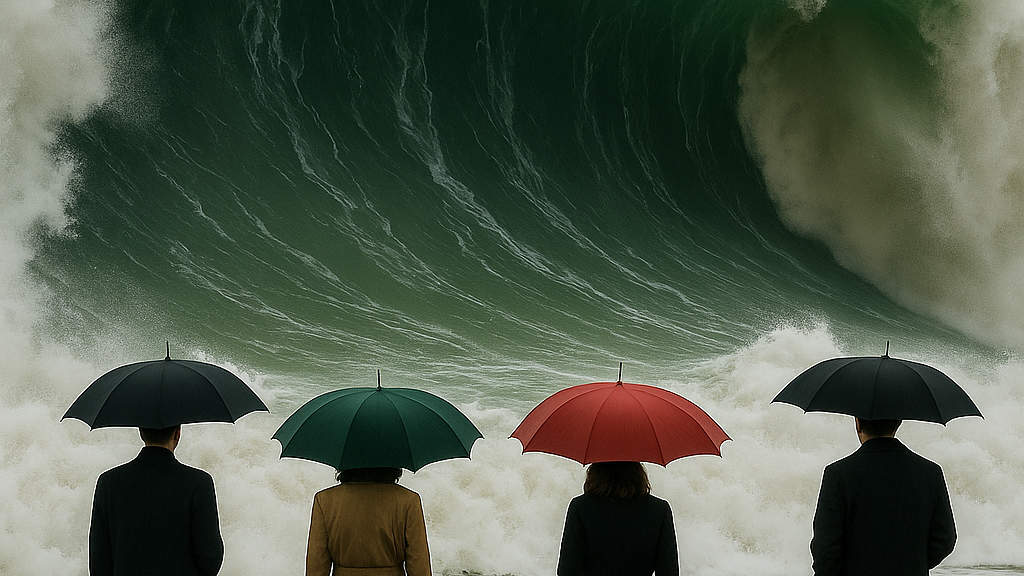
Artificial intelligence has already marched into the marketing toolkit; fast, seamless, and often with astonishing results. ChatGPT (or “Chatty G”, affectionately what I call it) is now a daily companion for many marketers. But amid the hype, there’s a thunderous silence on one of the most urgent issues of our time: ownership of creativity in the age of AI.
When Writers Drew the Line
In 2023, Hollywood writers went on strike for 148 days. At the heart of the stand-off wasn’t just pay, it was principle. The Writers Guild of America drew a clear line in the sand: human creativity had to be protected from unchecked automation. Who owns the ideas generated when a machine has been trained on the lifetime of human expression? Who gets credit, recognition, and reward when the source of inspiration is blurred? It was a battle about more than screenplays. It was about the ownership of originality.
Marketers, the Eternal Optimists
Marketers are a notoriously optimistic tribe. We pivot. We experiment. We pick up shiny new toys without hesitation, test them, and fold them into campaigns. That adaptability has always been our strength.
But in the face of a seismic shift, optimism can’t be mistaken for strategy. Right now, too many of us are treating AI like a passing storm, pulling out umbrellas, when in reality we are staring down a tsunami.
Too often, marketers are already dismissed as the “colouring-in department” by boards and C-suite executives, a perception that our work is tactical, superficial, and easily replaced. If we rely on AI to churn out content like it’s a chocolate factory, we only reinforce that stereotype. Scale without strategy does not elevate marketing; it reduces it. If we want to claim our rightful place as strategic drivers of growth, we need to demonstrate that foresight, ethics, and creativity guide our use of AI, not just speed.
The Copyright Conundrum in Marketing
The uncomfortable truth is that copyright issues in AI-generated content remain underexplored in marketing circles. We celebrate efficiency gains and marvel at content scale, but rarely pause to ask:
Who truly owns AI-generated ideas?
How much of what we produce is derivative versus original?
What does it mean for brand equity if the “voice” of the brand is technically machine-made?
The questions are not merely legal. They cut to the very heart of brand trust and creative integrity.
From Umbrellas to Lifeboats
The industry cannot afford to treat this moment lightly. The Hollywood strike showed us what happens when creative professionals feel their value is being eroded. Do we think marketing, an industry that thrives on human insight, nuance, and emotional connection, is immune?
If marketers don’t engage deeply with the ethics of AI now, others will define the boundaries for us. Regulators. Lawyers. Tech giants. And when that happens, our “seat at the table” may already be gone.
This is not a call to abandon AI, far from it. It is a call to raise the level of conversation. To go beyond dashboards and prompts and start shaping the frameworks for how AI and human creativity co-exist. To insist that brands not only use AI responsibly, but also transparently.
Because in the end, marketing is not just about reach, clicks, or conversions. It’s about shaping culture. And culture cannot be entrusted to algorithms alone.
The tsunami is here. Umbrellas won’t cut it. The question is: Are we ready to build lifeboats?